Laser hair therapy

Nowadays, more and more people are struggling with various hair problems.
For example, hair loss,
– poor hair quality,
– slow hair growth,
– dry scalp,
– split hair,
– patchy hair loss,
– oily hair or
– baldness is an increasingly common aesthetic problem in women and men.
These symptoms become more intense after certain diseases, such as cancer, COVID-19 infection, certain medications, improper nutrition, changes in hormonal balance, or stress.
Hair loss can also cause anxiety, depression, and self-esteem problems.
Hair growth and its quality and characteristics depend on many factors and can change continuously. Although there are many methods to stimulate hair growth, or hair growth, it is worth choosing one that provides a permanent solution. Our experience so far shows that 9 out of 10 people – often children too – suffer from some kind of hair problem.


As a beauty industry research center, we are constantly investigating hair and scalp-related problems and we believe that
• nearly 701% of the adult population experiences some kind of hair problem during their lifetime,
• 40% of women and 60% of men struggle with visible hair loss before the age of 50,
• the number of hair problems has increased significantly among those who have had COVID-19 infection, for example, more than 20% of them experience significant hair loss,
• In addition, for more than half of the people surveyed, the cause of hair loss can be linked to quality of life, stress, and other psychological problems.
Research shows that people with hair problems have 40% that show self-esteem problems and a deterioration in the quality of social relationships.
Therefore, it is very important to recognize and properly treat problems related to hair and scalp as soon as possible.
The therapy we developed A synergistic combination of electrocosmetic devices and individually defined and selected active ingredient complexes. This means that we use various electrocosmetic devices and methods during the treatments, the effect of which is enhanced with active ingredient complexes designed for the specific problem of the Guest. According to the literature, these can be effective individually for certain hair problems, but when combined together, a much more effective result can be achieved.
Hair problems are caused by complex physiological processes. The functioning of hair follicles is fundamentally determined by the quality of microcirculation and nutrient supply. These can be influenced by many factors, which is why our goal is to uncover hair and scalp problems: we look for the cause and help solve it, not just the symptom.
What does laser hair therapy cover?
As we mentioned, our therapy is a complex procedure, during which we combine different devices and active ingredients. We call this complex, synergistic therapeutic system laser hair therapy. It got its name from the fact that the most important of the electrocosmetic treatments used is the use of laser. Low-level laser therapy (LLLT) or photobiomodulation effectiveness numerous clinical trials supports.
The cellular mechanism of action of the diode laser involves enhancing mitochondrial activity, which results in increased cell metabolism and renewal capacity.
Laser hair therapy is a widely used tool for hair thickening, a complex series of hair and scalp regenerating and hair strengthening treatments that is recommended for both children and adults.
Each treatment takes 45-60 minutes. Each treatment consists of five steps. These steps enhance each other to strengthen the hair, improve the hair structure, and regenerate the scalp.
Since continuous nutrition is necessary for the cells of the hair follicles to heal and for the hair strands to become stronger, in our experience, real and lasting results can only be achieved in a therapeutic form. Therefore, laser hair therapy can only be used within a therapeutic framework – that is, as a series of at least ten suitable treatments.
During the treatment, we use skin-friendly, animal-free active ingredients. The treatment is painless.
The following five electrocosmetic steps take place during a single treatment.

1. Consultation combined with hair diagnostics
The first treatment is a personal consultationstarts with.
During the consultation, we would like to get a comprehensive picture of all the factors that can affect the functioning and condition of the scalp. During the conversation, we will assess the general and specific characteristics of the scalp and hair follicles. We will determine the hair type and the nature of the problem, as well as the possible cause of any inflammation.
Then our specialist will perform the trichoscopic hair diagnosticst. This is essentially a hair examination, during which we analyze the hair follicles and scalp under microscopic magnification with a microcamera. This gives us a more complete picture of the individual condition of the scalp and hair follicles of the given Guest.
During hair analysis, we also evaluate the condition of the hair strands using a separate microscope.
During the hair examination, we determine the type of hair loss and the frequency of laser therapy that best suits the problem.
2. Scalp cleansing and thiselectrotherapy comb treatment
As the first step of the treatment, we treat the scalp with a preparatory hygiene liquid. The plant-based preparation is a special keratin-dissolving, disinfectant, and deep-epidermal cleansing agent suitable for cleaning the skin surface, which also cleans the follicle, thus opening the pores and promoting the absorption of the active ingredient to be applied afterwards.
After that, the hair and scalp treatment with an electrotherapy comb follows.
We use the device to scan the hair and scalp. On the one hand, we move the hair follicles and stimulate blood circulation in the scalp.
Thanks to this, the cells of the scalp can prepare to absorb the active ingredient.
On the other hand, the electrotherapy comb disinfects and sterilizes the scalp and hair. It also has a soothing, anti-inflammatory effect.


4. Laser stimulation
The fourth phase of the procedure involves laser stimulationto.
During laser scalp stimulation, the 660 nanometer diode laser gently penetrates the upper layer of the scalp with 0.12-0.36 J of energy, without heating, damage or any negative effects, where it increases blood circulation, which has a wonderful positive effect on the hair follicles. The 660 nanometer low-intensity diode laser technology increases blood flow to the scalp, thereby helping the development of healthy hair follicles, accelerating the flow of essential nutrients to the hair follicle cells, the elimination of harmful substances and cell metabolism. Thanks to this, the hair follicle cells receive enough energy to develop a healthy and strong hair strand from a weak hair strand, which is a basic condition for the growth of thick hair.
All this without damaging the scalp.


5. Meridian comb energizing treatment
Our treatment concludes with a special electrocosmetic intervention, which on the one hand helps the applied active ingredients to be utilized in the deeper layers of the scalp, and on the other hand, by reaching the meridian points, it dissolves the energy blocks that inhibit the development of the hair follicles. By releasing the energy blocks, the body's self-healing power is also strengthened. The scalp - especially if it is inflamed - calms down, and the hair follicles open up for a more intensive absorption of the active ingredients that are gradually absorbed over the next twenty-four hours.
The salon treatment complement a personalized home care routine The results of this routine are monitored each time during therapy and the necessary active ingredient complexes are adjusted to the changes.
The basic package of 10 treatments can be repeated as many times as you like. However, we also have complementary therapy packages, from which we always recommend a suitable one to our Guests, based on the current condition of the hair and scalp.
Who we recommend laser hair therapy for

Complex treatment is recommended for anyone with any of the following problems:
- hair loss (also against severe hair loss),
- baldness,
- poor hair quality,
- slow hair growth,
- damaged, dull, brittle hair,
- oily, dandruff-prone hair,
- excessively dry scalp,
- sparse hair,
- thinning hair, often accompanied by increasing hair loss,
- for scalp irritation, itching,
- eczematous scalp,
- dysfunctions caused by autoimmune diseases such as lupus or psoriasis,
- scalp fungus (tinea capitis), also known as fungal scalp,
- hair problems due to allergies, gluten sensitivity, intolerance,
- androgenic alopecia,
- hair transplantation, regeneration after hair transplantation,
- Alopecia areata – patchy hair loss,
- hair loss after childbirth or dieting,
- hair loss and other hair and scalp problems due to stress,
- post-COVID hair loss,
- hair loss during postmenopause,
- after diseases, treatments, and drug therapies that result in hair loss.

Expected results of laser hair therapy

How to prepare for laser hair therapy
As mentioned above, laser hair therapy consists of a series of treatments. During the treatments, we want to ensure that the narrowed blood vessels of the scalp receive oxygen-rich blood, the active ingredients are fully absorbed, and thanks to the five-step process, the hair follicles and hairy scalp cells are activated. For this, it is very important to complete the 10-12 appropriate therapies.
During hair diagnostics, be careful not to wash your hair for 48 hours before treatment. This is no longer necessary for subsequent treatments, but wait at least 24-48 hours after each treatment before washing your hair so that the active ingredients can be properly absorbed into the scalp and hair follicles.
When purchasing the therapy package, we also provide a home care product line, which ensures continuous intake of active ingredients and nutrients even between treatments.

OUR RESULTS


Hair loss in young adolescents is often temporary and can have many causes, but one of the most common and significant factors is psychological stress. In addition to hormonal changes at this age, increased school, social and self-esteem pressures can also trigger serious physical symptoms, including hair loss.
Chronic or acute stress triggers a neuroendocrine response in the body: Cortisol levels (stress hormone) increase, which results in changes in the blood supply to the scalp, impaired nutrient and oxygen supply to the hair follicles, and disruption of the hair growth cycle. This can be particularly sensitive for adolescents, whose hormone balance is already unstable.
Telogen effluvium is the most common type of stress-induced hair loss at this age:
Stress causes many hairs to enter the resting (telogen) phase prematurely and massive hair loss can be observed 2–3 months after the stressful event. As can be seen in the photo, the hair loss is typically diffuse (evenly distributed) hair loss, not patchy. Our guest showed noticeable improvement by the end of the basic therapy thanks to regular hair therapy and the professional application of home care products.

Female pattern hair loss, or alopecia, is a common and often distressing problem in women. The most common form is androgenetic alopecia (female pattern hair loss), which is characterized by a gradual thinning of hair on the crown and crown of the head. The severity of this is graded using the Ludwig scale.
In addition, there are several, often more severe, types of alopecia, the treatment of which also depends on the underlying cause. Most often, restoring hormonal balance, lifestyle changes combined with laser therapy can bring spectacular results. Addressing nutritional deficiencies and reducing stress are also key. Not all cases of hair loss resulting from alopecia are reversible, but laser hair therapy is effective for most formations. Treatment started on time greatly increases the chances of success.
With proper treatment, we strengthen the hair follicles by stimulating the hair follicle (papilla), which results in the restoration of hair health. We supplemented the laser hair therapy with phytoessential home care products, which, thanks to their natural ingredients (nettle, thyme, lavender, sage), can reduce hair loss. During the laser hair therapy, we reduced the factors that support hair loss by applying high-active ingredients to the scalp.


Female hair loss is an extremely common phenomenon, which can have many causes and often places emotional burdens on those affected. Our Guest experienced increased hair loss and her hair volume decreased significantly. Fortunately, there are now several hair thickening options available, including laser hair therapy, during which we activated the cells of the hair follicle and supplied the hair bulb with nutrients. During laser hair therapy, our Guest's hair loss was treated with a synergistic extract containing a complex of active ingredients rich in natural active ingredients, active plant stem cells, cinchona bark extract, martilap, yarrow, and red grapes, stimulating the formation of keratin, the protein metabolism of fibroblasts, and the proper supply of nutrients to the hair, supporting the original physiological cycle of the hair.

Our guest came to us with a dandruff scalp disorder. In his case, we could talk about dry dandruff, which was also evident during microscopic examination of the hair follicles.
Dry dandruff (pityriasis sicca) is the most common lesion of the scalp, which appears as small, white or grayish-white flakes, without inflammatory symptoms. The primary cause of dandruff is the overgrowth of the yeasts Malassezia furfur and Malassezia restricta on the scalp. These lipophilic microorganisms metabolize the secretion of the sebaceous glands, producing irritating inflammatory mediators. According to literature sources, stress and hormonal changes, low humidity and cold weather, too frequent hair washing, and certain nutritional deficiencies (e.g. zinc, B vitamins) can exacerbate this unfavorable condition. During the treatment, we supplemented the electrocosmetic (machine) treatments – which are part of the five-step salon treatment, including the 40-minute laser regeneration – with the integration of active ingredients into the scalp: lemongrass, mint, sweet almond oil, rosemary, lavender, avocado extract, Icelandic lichen were used, and after the scalp was regenerated, we supported the strengthening of the hair with active nutrients. We replaced the liquid extracted from the hair by previous drying shampoos with coconut and hyaluronic extracts.


Hair loss is a significant problem for both women and men. Hair loss and baldness can be traced back to many causes, especially stress, adrenal hyperfunction, circulatory problems, hormonal problems, some kind of inflammation, iron deficiency, digestive problems, the presence of heavy metals, etc. Determining the cause of hair loss is always possible based on careful consideration of all the circumstances of the case.
During laser hair therapy, we treated our guest's hair loss with a complex rich in natural active ingredients, active plant stem cells, a synergistic extract containing cinchona bark extract, martilap, yarrow, and red grapes, stimulating the formation of keratin, the protein metabolism of fibroblasts, and the proper supply of nutrients to the hair, thus supporting the original physiological cycle of the hair. After a few treatments, the hair structure began to transform, a more vibrant, stable hair structure was created, and the development of new hair strands also began.

Our Guest came to us with hormonal hair loss. According to literature sources, hyperandrogenic conditions due to polycystic ovary syndrome (PCOS), thyroid dysfunctions (hypo- and hyperthyroidism), and insulin resistance can all result in hair loss. During laser hair therapy, we treated her hair loss with a complex of active ingredients rich in natural active ingredients, active plant stem cells, a synergistic extract containing cinchona bark extract, marzipan, yarrow, and red grapes, stimulating the formation of keratin and the supply of energy, oxygen, and nutrients to the cells of the hair follicles. During the treatment, hair regeneration and the rebuilding of hair fibers were visible from time to time. Since hair loss is usually a symptom of something else, in this case, we also based our treatment on the medical diagnosis of internal pathogenic factors. Based on the Guest's lifestyle, habits, and diet, we determined the intensity of application of each electrocosmetic device, identified the necessary active ingredients, the composition and amount of which were continuously adjusted to the current condition of the scalp and hair from treatment to treatment. Our guest also supported us by acknowledging our expertise and by regularly applying the rituals intended for the home.


Our guest came to us with increased hair loss after giving birth.
Postpartum hair loss (postpartum alopecia or postpartum telogen effluvium) is diffuse hair loss that occurs 2-6 months after childbirth, usually affecting 40-50% of women.
During pregnancy, high estrogen and progesterone levels prolong the anagen (growth) phase of the hair cycle, leaving hair that would normally fall out on the scalp. After childbirth, these hormone levels drop abruptly, leading to a massive transition into the telogen (resting) phase.
Full recovery usually takes 6-15 months. The extent of hair loss can vary - normal daily hair loss (80-100 strands) can increase to 400-1000 strands. Hair loss was treated during laser hair therapy with a complex rich in natural active ingredients, active plant stem cells, a synergistic extract containing cinchona bark extract, marzipan, yarrow, red grapes, stimulating the formation of keratin, protein metabolism of fibroblasts, proper supply of hair with nutrients, supporting the original physiological cycle of the hair. Sage extract has a skin cleansing effect, rosemary and nettle have a stimulating effect on the hair bulb, which helps maintain the physiological cycle of the hair. Glucosaminoglycans and natural active ingredients, which are essential for hair growth, have an intensive nourishing, moisturizing, stimulating, toning and antioxidant effect.

Our Guest's hair was examined at five points at two hundred and one thousand times magnification. The structure of the hair follicles indicated dehydration, water and nutrient deficiency, therefore we used a pack containing enzymes, lipids, proteins, minerals, vitamins, a multi-energetic serum, and a phytoessential tonic ampoule, as well as a complex containing rice protein, lysine, and glucosamine-glycan, which reduces the premature death of dermal papilla cells, nourishes and moisturizes. For home care, we recommended a hair bath with a high content of active ingredients, hair cream, oil essence and tonic ampoule.

Psoriasis is an autoimmune disease that causes skin cells to multiply too quickly. The inflammatory disease most often appears in a chronic plaque form on the scalp, as in our Guest's case. In addition to the plaques, the thickened plaque epidermis can also be itchy, cracked, and oozing.
Microscopic examination of the Guest's hair revealed increased cuticle thickness and surface roughness, and micropits were visible on the hair. Scalp inflammation can weaken hair roots and make them brittle. Therefore, we treated our Guest's scalp with a soothing, anti-inflammatory and scalp-soothing concentrate rich in active ingredients.
As part of the oxygen therapy, we used vitamin B6 and Syringa Vulgaris bio-essence to support the reduction of the 5-Alpha Reductase enzyme, Asian Gingival extracts to reduce irritation and inflammation, and intensively nourishing, hydrating, stimulating innovative plant extracts to promote hair growth and strengthening. The synergistic effect of these was multiplied by laser stimulation. The reduction in inflammation and itching was noticeable after just one treatment.

As time goes by, hair strands become thinner, hair loss increases, and the scalp becomes dehydrated. Therefore, the supply of nutrients to the hair follicles also becomes more moderate. The hair becomes more spectacular and its structure also changes due to the graying process. During laser hair therapy, we treated the hair loss of our guest with a complex rich in natural active ingredients, active plant stem cells, a synergistic extract containing cinchona bark extract, martilap, yarrow, and red grapes, stimulating the formation of keratin, the protein metabolism of fibroblasts, the proper supply of hair with nutrients, and supporting the original physiological cycle of the hair. As can be seen in the photo, after five treatments, the hair strands become spectacularly thicker, fuller, and stronger. Perhaps the most striking thing is that the hair color became more intense, meaning that the synergies between the active ingredients used during the therapy and the laser technology activated the production of the melanin pigment that colors the hair.

Hair usually doesn't fall out during pregnancy, and it remains thick and strong due to increased estrogen levels. However, about three months after giving birth, most women experience significant hair loss.
Our guest came to us with thinning hair, dry, weak, and lackluster hair structure.
During the laser hair therapy, we used a complex of active ingredients that improves blood circulation, stimulates, is rich in phytoestrogens and nutrients, supplemented with biological extracts responsible for energizing cells. In addition, in the second phase of the treatment – after a significant reduction in hair loss – we began our phase supporting the growth of new hair and improving the hair structure.
During the oxygen therapy, we used a complex of Chinese horsetail bark, yarrow, red grape and marigold, followed by a complex of purple lilac, bamboo buds and lotus flower stem cells to strengthen the hair's keratin structure and promote faster hair growth.
The electrocosmetic phases of laser hair therapy have significantly contributed to the integration of these active ingredients into the scalp.

A significant portion of our guests experience some kind of hair structure problem. This can be attributed to a number of factors, such as environmental damage, weather, smog, chemicals, stress, certain medications, chemicals, nutrition, and the use of improper hair care products.
Our guest came to us with the problem of dry hair, split ends, "hairy", and difficult to comb. This phenomenon indicates a lack of moisture in the hair, and it can also be assumed that the cuticle scales that protect the internal structure of the hair are loosening, which can result in a loss of valuable amino acids.
During the laser hair therapy, we used different active ingredient complexes. We supplemented the intake of active ingredients with a home care protocol tailored to our guest's problems.
In order to close the cuticle scales that protect the internal structure of the hair, we used an active ingredient complex based on silk protein and brown algae with a high mineral content, as well as lychee, horsetail, and birch extracts.

Our guest came to us with oily hair and dandruff scalp problem. During the microscopic examination, we found a large amount of dead skin cells, which were held together by a colloid, sticky layer of fat. In addition to aesthetic problems, excessive fat can also result in thinning of the scalp, colonization of microbes and fungi, and a shift in the physiological pH value. During the laser hair therapy, we used a complex of active ingredients based on juniper, golden hair, thyme, lavender, sage, mint and rosemary, which regulates the production of fat and the function of the fungus called Pityrosporum ovale, which causes dandruff symptoms.
For home care that complements laser hair therapy, we recommended a phytoessential hair bath suitable for treating hair loss, a strengthening hair mask, and a highly concentrated herbal oil essence, while to restore the condition of oily hair, we recommended a complex containing additional nature-identical bioactive ingredients, such as tall lemongrass, hyssop, and linden extracts.


Our guest complained of significant hair loss due to Covid infection. In addition to hair loss, oily hair and scalp also developed. In addition to aesthetic problems, excessive oil can also result in thinning of the hairy scalp, colonization of microbes and fungi, and a shift in the physiological pH value. During laser hair therapy, we used a herbal complex to stop hair loss, which, thanks to its natural active ingredients, strengthened the hair follicles by stimulating the papilla. In addition, we used a complex of active ingredients based on thyme, lavender, sage, and mint, which regulates sebum production.
For home care that complements laser hair therapy, we recommended a phytoessential hair bath suitable for treating hair loss, a strengthening hair mask, and a highly concentrated herbal oil essence, while to restore oily hair, we recommended a complex containing additional nature-identical bioactive ingredients, such as tall lemongrass, hyssop, and linden extracts.
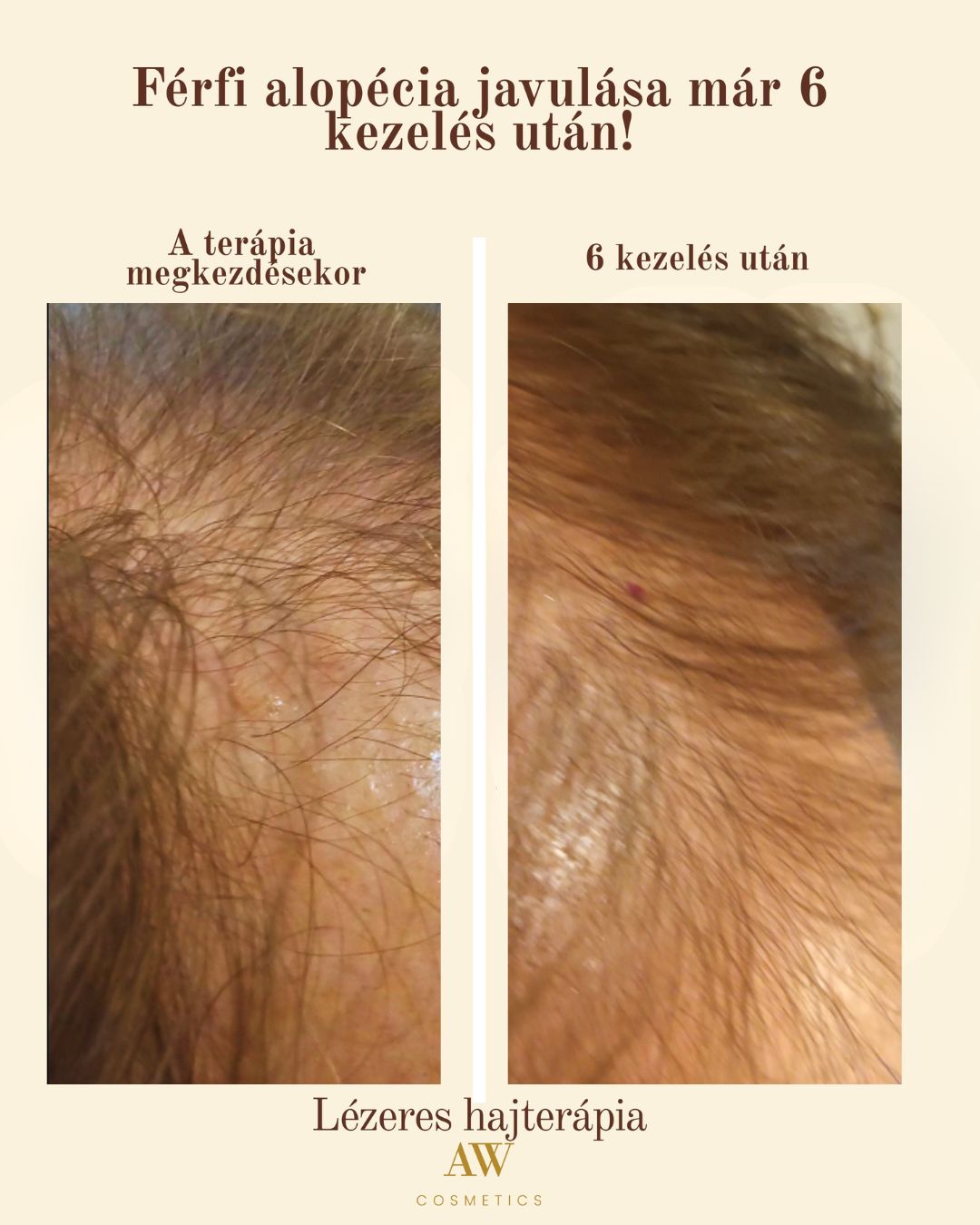
A férfi androgén alopecia a fejbőrön gyakran örökölt, progresszív hajritkulás formájában jelentkezik, amely a hajtüszők életidejének megváltozásával jár. A hajhullás középpontjában a hajszálak fokozatos miniaturizációja áll, ami vékonyabb és rövidebb hajszálak megjelenéséhez vezet. A tüszőkben a magasabb DHT-szint hosszú távon zsugorítja a hajtüszőket, amely a növekedési fázis (anagen) lerövidüléséhez és a kilökődés (telogen) időszakának lassúbb felvételéhez vezet. A genetikai hajlam felerősítheti ezt. Férfiak esetében a hormonális tényezők miatt nagyobb kockázattal alakulhat ki androgén dominancia a fejbőrön, amelynek gyakorisága ráadásul a kor előrehaladtával nő. Az alopécia általában a frontotopai területen kezdődik, majd a koronán a hajvonal és a tüszőállomány is érintett lehet. Férfi vendégünk esetében a terápia során olyan aktív hatóanyag komplexet alkalmaztunk, amely segíti a hajhagymák metabolikus aktivitását és a hajszálak erősödését. A kezelés során hajrost szerkezet javító és keratin képződést serkentő hatóanyagokat használtunk, amelyek védik a hajhagymákat a sejtkárosodástól, valamint serkentik a helyi mikrokeringést. A lézeres hajterápia és a professzionális hajápolási termékek kombinációja rövid időn belül látványos javulást eredményezett, amely hosszabb távon is képes elősegíteni a hajképződést.
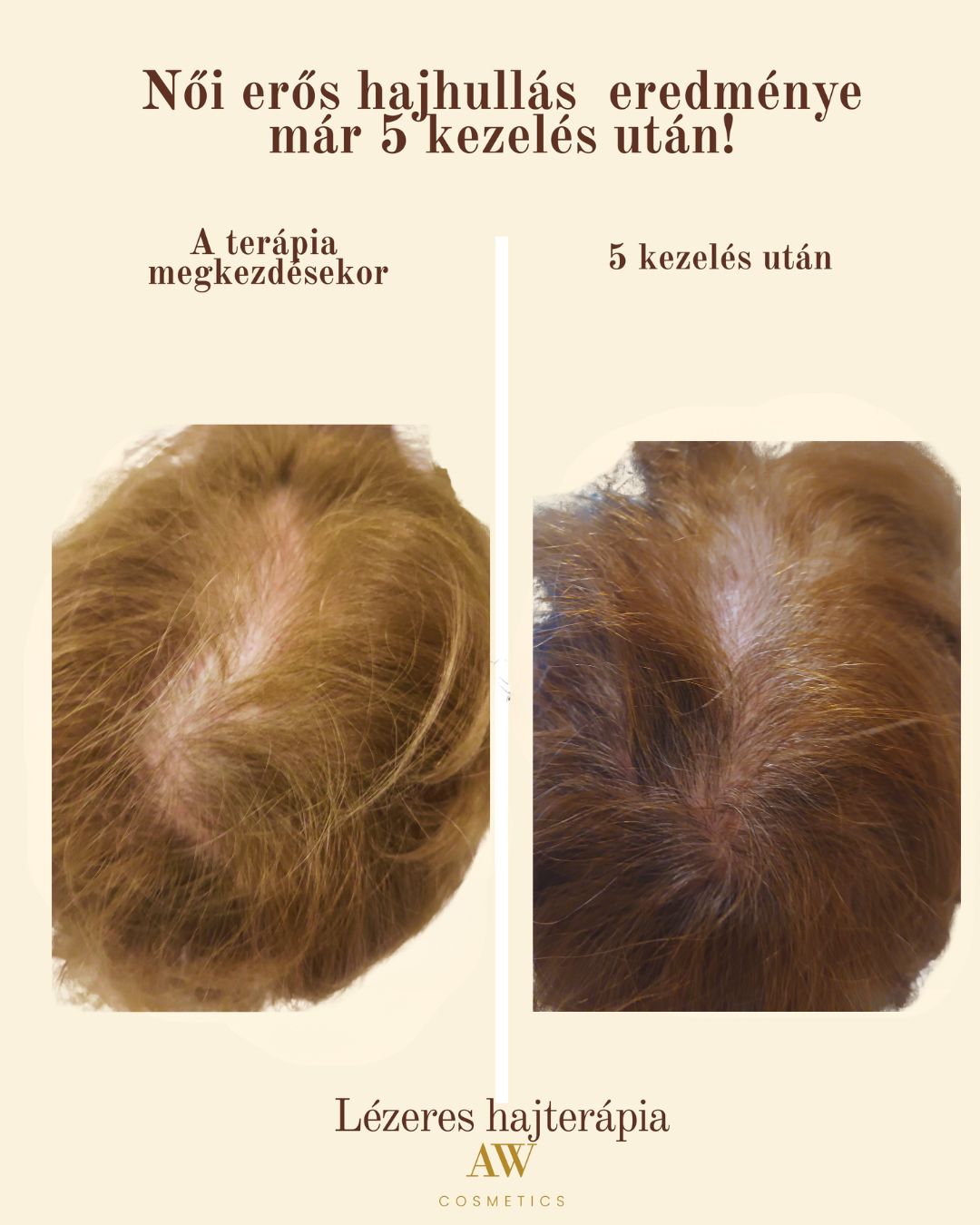
Az öregedés hatására a hajszálak száma csökken és a hajszálak vékonyodni kezdenek (follicular miniaturizáció). Az idő múlásával változnak a hormonális arányok (pl. DHT hatás nőknél és férfiaknál egyaránt), a menopauzát követően csökkenhet az ösztrogénvédő hatás, ami hozzájárulhat a hajritkuláshoz. Ilyenkor megváltozik a haj ciklikus folyamata: az anagen (növekedési) fázis rövidülhet, a telogen (kihullási) fázis hosszabb lehet, ez által a normális növekedés ritkábban fordul elő. Ez főként a fejbőrön történik, és a haj vastagsága, sűrűsége csökken. A fejbőr természetes lipid- és pH-egyensúlyának felborulása tovább ronthatja a hajminőséget, érzékenységet és szárazságot okozva. Női, idősebb vendégünk hajritkulás és általános hajgyengülés problémájával kereste fel szalonunkat. A kezelést lézeres fejbőrterápiával kezdtük, amely fokozza a sejtszintű regenerációt és támogatja a haj növekedési ciklusának aktiválását. A kabin kezelés során célzott, regeneráló és stimuláló terápiát alkalmaztunk, amely kifejezetten az érett fejbőr és haj igényeire lett összeállítva. A kezelést otthoni terápiával egészítettük ki: tüszőtisztító és hajritkulásra, hajgyengülésre alkalmazott professzionális termékek használatával. Az eredmények már az 5. kezelést követően látványosak, a haj erősebbé és dúsabbá vált.


